How much time does it take to make a difference?
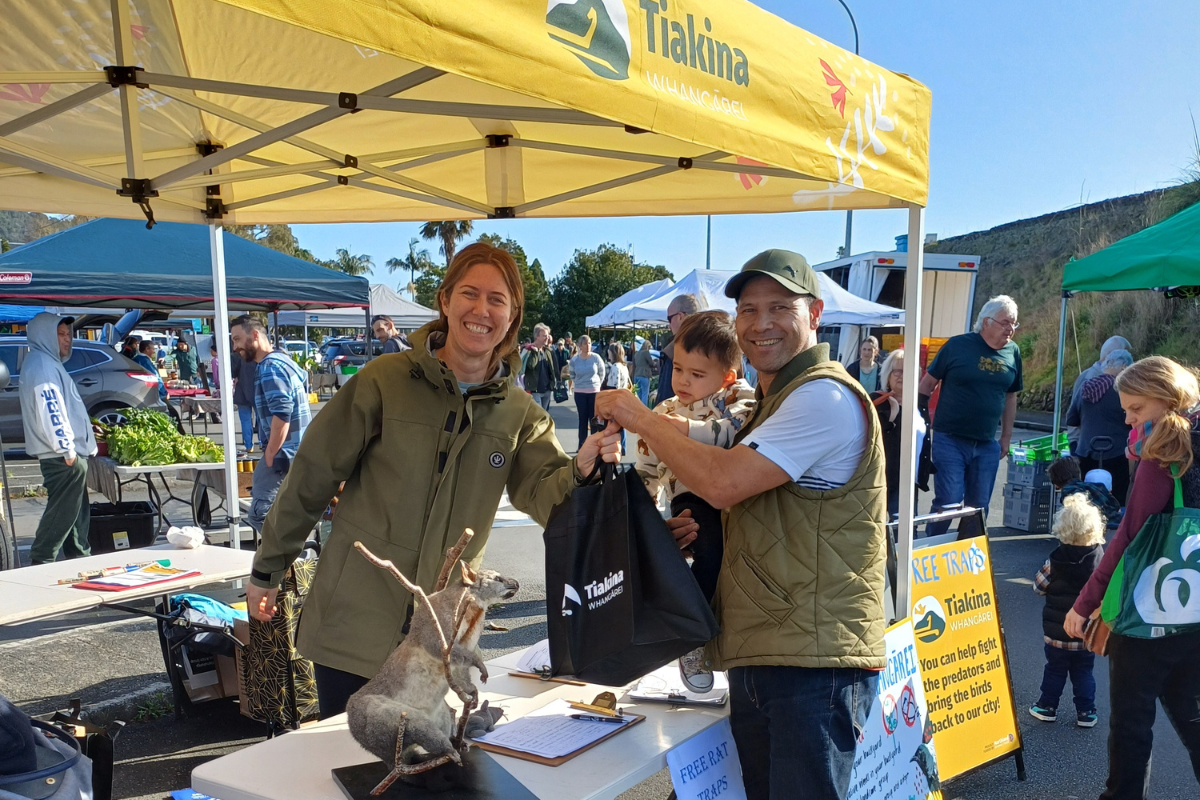
That question came up time and again during a morning spent talking with locals at the Whangārei Growers Market.
The market was an opportunity to connect with the community, share what Tiakina Whangārei is all about and, most importantly, listen. To encourage people to stop and chat, visitors were invited to complete a short survey in exchange for a free rat trapping kit.
What we heard at the market
The conversations painted an interesting picture.
More than half of the people surveyed (56%) had never heard of Tiakina Whangārei before. While that showed there is still work to do in raising awareness, there was also some encouraging news. Once people learned about the project and the support available, 93% said they felt Tiakina Whangārei was either very valuable or extremely valuable to them and the wider Whangārei community.
The biggest barrier: time
But when the conversation turned to getting involved, a common barrier quickly emerged: time, or lack of.
Many people told us they were already juggling work, family and other commitments. Volunteering felt like one more thing competing for limited time and energy. Others said they wanted to help but were not sure where to start or what support might be available to them.
The reality is that volunteer contributions don’t not have to be a huge commitment – many people choose to get involved as and when they can. Being part of a community weeding group is a great way to do this. Most groups have a core team of volunteers who attend every working bee, alongside others who join group activities whenever their schedule allows. Every contribution is valued, regardless of how often someone can participate.
Joining a trapping group, as another example, may only require a few hours of your time once a month. Parihaka Community Landcare Group operates this way. The group meets on a Sunday once a month to clear and service its trap network. Volunteers who are available come together on the day, while others complete their assigned trap line at a time that suits them over the following weeks.
Turning interest into action
The real story from the market, however, was not just about the challenges people face – it was about the opportunities that opened up once people understood the support Tiakina Whangārei can provide.
Several conversations have already turned into practical next steps.
After meeting a couple who back onto a Whangārei District Council reserve in Te Kamo, Tiakina Whangārei Project Lead Jo Skyrme will be visiting their property to explore how the project can support increased trapping efforts in the area to the benefit of native biodiversity and the people that live in the area.
Another conversation has led to planning discussions around a community pest control group starting up in Raumanga. Similar discussions are underway in Morningside, where residents are interested in working together to reduce pest numbers across their neighbourhood. Another resident left inspired to start a conversation with his neighbours about establishing pest control efforts along there street in Te Kamo.
Support available through Tiakina Whangārei
These conversations highlight an important part of the project’s role. Tiakina Whangārei is not simply about asking people to volunteer – it’s about helping people turn their interest into action by providing advice, resources, training and connections.
The survey reinforced that many people care deeply about protecting Whangārei’s native biodiversity but are not always aware of the support available to help them get started.
Through the Tiakina Whangārei project, Northland Regional Council can support individuals, neighbourhoods and community groups with traps, herbicide, tools, practical training, and advice. Support is also available for planning larger projects, obtaining permissions to work on public land, installing trap networks, identifying pest plants, and developing basic weed management plans.
Every action counts
If there was one clear takeaway from the day, it was this: people care about the future of Whangārei’s environment. The challenge is not a lack of enthusiasm – its helping people find a way to contribute that fits their lives and making sure they know support is available when they are ready to take that first step.
Whether it is checking a trap line once a month, joining a local weeding group, servicing a single rat trap or removing weeds from a backyard, starting a conversation with neighbours to let them know about the support available through the Tiakina Whangārei project, or helping lead a community initiative, every action contributes to a much larger effort. When those individual actions are supported, connected and multiplied across the district, they have the power to create lasting change.
Related Articles
Community Groups • Whangārei
Giving back to the forest that gave back