Supporting businesses to tackle urban rats
Tiakina Whangārei is supporting local businesses to manage the growing rat population along urban streams in the CBD and surrounding residential areas.
Monitoring and research conducted by Tiakina Whangārei and NorthTec Environmental Management students late last year found an abundance of rats were detected along urban streams, notably the Waiarohia Stream (adjacent to Western Hills), the Tawera Stream and the Hatea River in the CBD.
Tiakina Whangārei coordinator Dr Dai Morgan says the data was particularly interesting as the rats were found in places where there were few trees, which aren’t typically considered good habitats. “This suggests that these water bodies are acting as corridors for rats to move along, giving them safe passage in and out of the CBD and residential areas.
“If we target these areas, we could potentially have a large impact on the city’s rat population. There has been limited research on rat management in New Zealand’s urban waterways, so it’s great to be able to be taking the initiative in Whangārei by monitoring and measuring our efforts to see if our learnings could be applied elsewhere around New Zealand,” says Dr Morgan.
Rats have a major impact in New Zealand because they are omnivores – eating birds, seeds, snails, lizards, fruit, weta, eggs, chicks, larvae and flowers. The varied diet of rats also makes them competitors with native wildlife for food sources.
Not only do they threaten native wildlife, they can also carry diseases, nibble at electrical wires and cause fires, as well as spoiling stored food.
Dr Morgan says that for the rat population to decrease in urban streams, it needs to be a collective effort. “We are keen to work with business owners in the CBD, as well as residents in the surrounding areas, to get as much support as possible, to ensure the biggest possible impact. The more traps and bait stations we have the more we can make a genuine impact on the city’s rat population.”
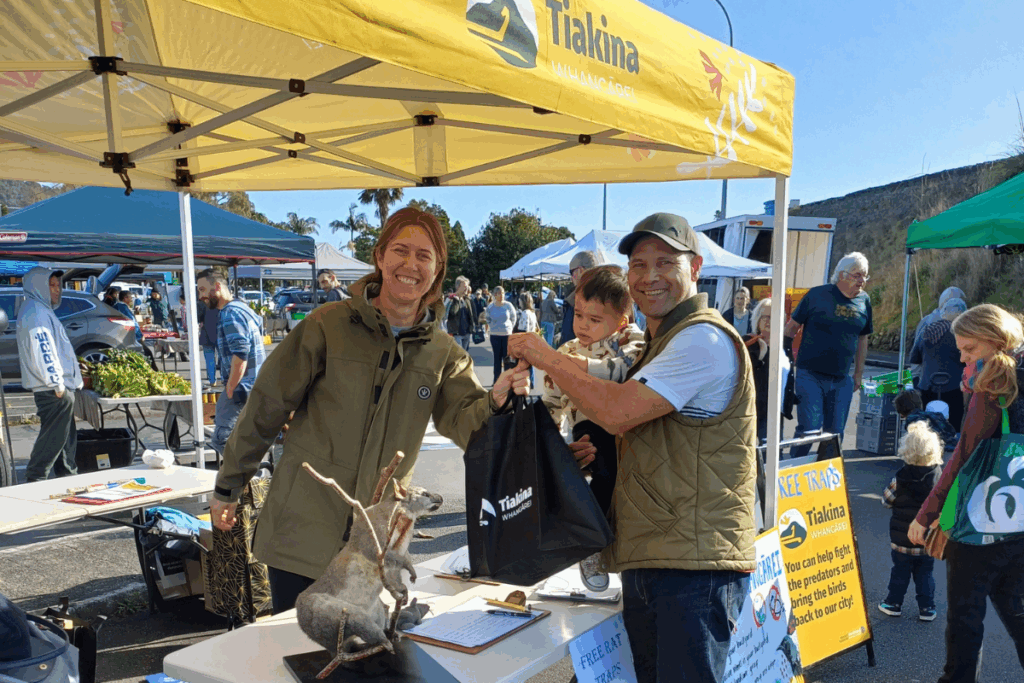
Tiakina Whangārei will be offering free bait stations or traps and trap boxes to businesses and properties along the waterways, to ensure the rats can be targeted as close to the stream edge as possible. The bait stations are lockable and tamper-proof, so are very difficult for children and pets to get into.
Performing regular predator surveys is a key part of Tiakina Whangārei’s mission to capture the journey towards a predator free Whangārei. The data can then be used to inform ongoing predator control and management strategies, both in Whangārei and in other urban areas.
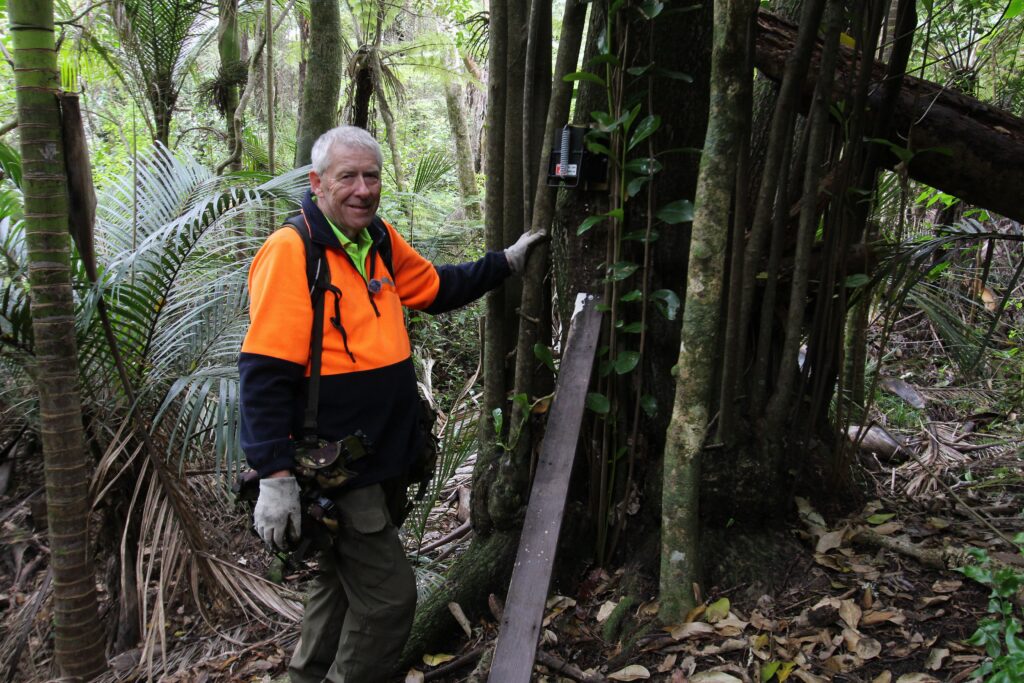
The most recent survey was conducted from late September to October last year (2020) with help from NorthTec Environmental students. The survey used Department of Conservation methods including tracking tunnels and chew card surveys at 15 sites in and around Whangārei, across a mixture of forest fragments, urban streams and areas adjacent to mangroves.
Tiakina Whangārei is confident that the rats living along Whangarei’s urban waterways can be brought under control if enough businesses and residents start trapping or putting out bait stations. For example, sustained rodent control by the Parihaka Community Landcare group resulted in only 3.3% of monitoring devices in 2020. In contrast, 43% of monitoring devices detected rats in areas of Parihaka where there was no pest control.
Related Articles
Backyard Trapping • Community Groups • Kerikeri • Whangārei
How much time does it take to make a difference?